

How Can They Be So Hateful? Clues From Brain Science About Our Current Social Antagonism
Written by Allie Boman

We’ve tried fighting fire with fire, waiting for it to die out, and even heaping blame and shame on those we see caught up in irrational behaviors. But is this working? Or are we just mirroring the very behaviors we’re trying to stop?
Story
Standing alone in the town square, she suddenly was no longer standing. She was dancing. There was no music, no beat, just something inside her that drove her to dance. She continued for hours, and people looked on with confused curiosity. Her energy was alluring.
It wasn’t long before others felt the beat in their own feet. They joined in, then more and more until it was a mob of dozens of dancers.
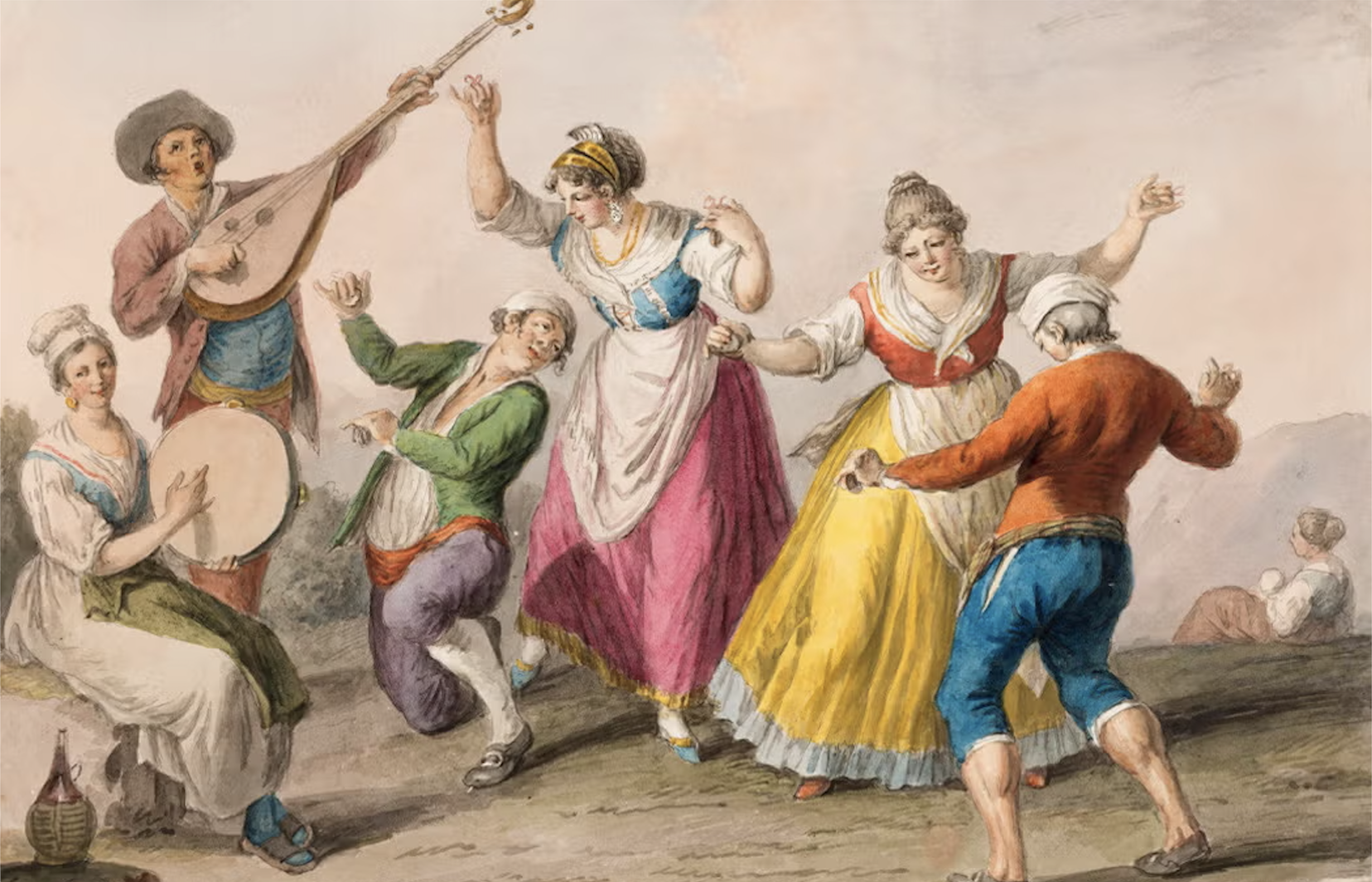
Credit: JStorDaily
Some onlookers went home to eat and drink their worries away, but those in the square kept dancing. Even after most of the town went dark with sleep, they kept dancing and dancing until they passed out from exhaustion.
As the sun came up, the commotion continued, more people joined, weary people pressed on in their furious dance—the public health department started getting worried. Even when their shoes wore through and their feet bled, the dancers continued to dance, and hour by hour more joined them, only stopping when they lost consciousness and fell to the ground.
Exhaustion seemed like the only cure, so the public health leaders brought in a band, hoping to burn out the feverish energy. But after a few days, no one was going home to sleep, no one was stopping for water or food; when they regained consciousness, they rose to their feet to dance again.
Religious leaders smelled a curse, and they started blaming sinners for angering the god. But heaping shame on the dancers and the town brought no relief. Only more dancing.
The bemused wonder of it all grew dark when dancers began to die. As their number dwindled, some from death and some from dispersement, the dancing plague died out. Yet it would rise again in other times and places.
Dancing Plagues Today
Now, of course, we know better.
Brain scientists have identified mirror neurons, a mechanism in our brains that triggers us to copy what we see others doing. For example, mirror neurons explain why, when we see someone else yawn, we often feel an irrepressible urge to yawn as well.
What is the purpose of mirror neurons? Our animal nature believes in the wisdom of the many, and it seeks to conform out of self-preservation. In the case of yawns, seeing someone else yawn—seeing them gulp up oxygen—signals to our system that we ought to get more oxygen while we can.
Mirror neurons partially explain why the relentless impetus to dance spread to onlookers like a plague.
But why did that first individual start dancing, with no music, and seemingly no ability to stop? These social phenomena have sprung up in communities experiencing intense stress, brought on by famine or warfare. Individuals need some form of release or escape, and they find it in dance. They become unable to reason with themselves when they feel the relief that dancing brings. Because the stressors are shared by the whole society, the power of suggestion (mirroring) leads others to join in the corporate stress relief. But much like they cannot stop famine or war, they cannot stop their irrational response to it.
Psychologist David Webb writes, “The dancing plague was not merely a medieval oddity. It was an extreme example of mechanisms still visible today…the contagious pull of a yawn, the surge of emotion in a chanting crowd, or the darker spiral of group violence. Each reminds us that behavior spreads not only through choice but also through powerful social currents.”
Even though we know better, people continue to fall prey to what we now call social contagion—sometimes in wild crowds, other times in the groupthink of social media.
Tragic Social Contagion

In 2021, in Texas, a concert crowd lost control and crushed 10 people and harmed many others. Since then, people have roundly criticized the organizers’ inadequate security measures. They should have planned better for what everyone knows: concert crowds can get wild when people share excitement over an artist. The power of joining into something bigger than yourself, the feeling of anonymity while being surrounded, the relief of thinking only about the here and now: this combination is intoxicating. As a firsthand witness describes, not everyone at the Texas concert was caught up in hysteria. But they found themselves caught nonetheless. Tragedies like these are not uncommon globally.
Ideological Crowds
I’d like you to think about this: Could the psychological power behind the dancing plagues and the concert in Texas also perpetuate the vicious sidetaking in America’s cultural climate? Is this hatefulness for the other side a contagious social reaction to the stress, fatigue, and frenzy of our times?
In my lifetime, the United States has been governed primarily by two political parties and individuals who are more or less beholden to them. The idea of each party carries with it more than policy or theories about the role of government. Party identities have also become cultural identities, which sometimes transcend ethnic or historical identities. For example people of Latin American descent might be either Democrat or Republican, and therefore stand against or for deportation, respectively, as of 2026.
Many of us find ourselves asking, “How can they be so hateful?” We’re asking this of our family members, our friends (former friends?), our coworkers, and people who post baffling statements on social media. We ask this of political leaders. Personally, I ask this of Trump and his allies. Others can’t understand why Democratic politicians are so hateful, so blind.
Digital media—social media platforms, online news outlets, the torrent of emails from every side—has brought the public square to our pocket. We are updated constantly about what is going on in other communities, countries, and planets. Sometimes we’re less aware of our local communities—unless we’re on Nextdoor, in which case we know what’s happening to every cat and dog in our zip code.
Because almost everyone carries a video camera, we also become onlookers. We’re like those in the dark ages, watching their neighbors dance uncontrollably, wondering why their own feet start twitching to an inaudible beat.
It’s Us Too
Mirror neurons trigger us to mimic what we see and hear.
Have you ever sat in bed with your phone, watching someone angry about something, and realize your jaw is tight and your eyebrows bunched? Maybe you’re responding thoughtfully. But you may also be mirroring subconsciously what you see and hear.
It would be a mistake to suppose that this mirroring affects only our physical bodies. We are whole people. As our bodies mimic anger, so do our emotions, mindsets, and behaviors. Thus, simply by being human, we are prone to volley back to haters the hate that they hurled at us.
Don’t misunderstand: I’m not suggesting that we should all stay balanced and calm in the face of injustice and evil. Anger can be constructive. “Anger expressed and translated into action in the service of our vision and our future is a liberating and strengthening act of clarification” (Audre Lorde).
Anger can be useful and is not always foolish. But what about hatred? Does anyone switch sides because the other side hates them? Knee-jerk mirroring of hate for hate does harm to our whole society and is unproductive.
What Can We Do Instead?
Acknowledge the instinct to mirror hateful speech and closedmindedness. Every individual is susceptible to social contagion. You and I are not above this. We too must take care not to catch the plague of vitriolic sidetaking and closed minds.
Calm the nervous system. Like concertgoers caught up in a frenzy, when we are overstimulated and stressed, our mirror neurons are blazing. It might seem impossible, but find quiet.
“Our problem today is that we have allowed the internal to become lost in the external.” (Dr. Martin Luther King Jr.)
Seek out ways to slow your heart rate, relax your face, and remember who you are and what you believe. This will likely involve silencing your phone and setting it aside. For me, daily prayer and meditation grounds me in my belief that God is the true judge and he is committed to making everything right. I am angry. I am confused. But I am also capable of love for my neighbor, and I will center my actions in that capacity.
Model the respect, carefulness, and trust that we want others to mirror. This requires a radical shift. It means acknowledging what we can’t control—namely, the behavior of others—and taking ownership of what we can control—namely, our own behavior.
People have been quipping the golden rule for ages, ever since Jesus made it clear for us:
Do unto others as you would have them do unto you. This isn’t just ethical advice, it’s practical. People are likely to mirror the behavior of the people around them, for better or worse.
I don’t know what the answers are for our whole society. I don’t know the way forward for our politicians, for our health care system, for the entrenched polarization that has turned public debate into a lunchroom food fight and American cities into warzones.
I do know the way to live today. I am to turn from reactionary mirroring and instead turn the mirror so it reflects my image back to me. Have I succumbed to the social plague of hate? Next, I am to propagate a space for calming my nervous system and recentering, so that I can take careful action. Third, I am to act as a leader in lovingkindness. I am to live the way I want others to live.
I don’t know about you, but I want to live in a society where people take care of each other.
